Nature Retreat Near Dehradun
A Destination-by-Destination Guide to Getting It Right
Forest stays, river stays, meadows and wildlife zones. A guide to matching the right nature retreat near Dehradun to the trip you have in mind.
Nature Retreat Types Near Dehradun
"Nature retreat near Dehradun" can mean many things. It might be a tent on a riverbank, or a forest cottage on the Mussoorie ridge. It might be a quiet estate in the Doon Valley, or a birding base at the edge of a protected forest. What they share is simple. The natural world is the reason to stay, not a backdrop to a normal hotel. This guide sorts the nature retreats near Dehradun by what each one offers. It matches them to different kinds of traveller, and gives you the practical detail to choose well.
Dehradun sits where three very different natural settings meet. The first is the Doon Valley floor. It has farmland, patches of sal and teak forest, and the Rispana and Bindal rivers. The valley is built up, but green corridors remain, especially along the Song river toward Rishikesh. The second is the Mussoorie ridge and the Garhwal hills just above the city. They rise to 2,005 metres at Mussoorie and higher beyond. Here you find deodar and oak forest, open meadows, ridge-top views and a good range of places to stay. The third is the Rishikesh and Haridwar stretch, 45 to 60 km east along the Ganga. It has river forest, grassland and the edge of Rajaji National Park, which feels nothing like the hills. A nature retreat near Dehradun can draw on any of these, depending on what you want.
Nature Retreat Type 1: What Is a Forest Immersion Stay?
What it is: A stay inside or right beside an old forest. Your days are spent in the forest itself, not looking at it from a terrace.
What it offers:
- Guided forest walks with a naturalist in the early morning
- Learning to name the birds on the grounds
- Evenings by a fire in a forest clearing
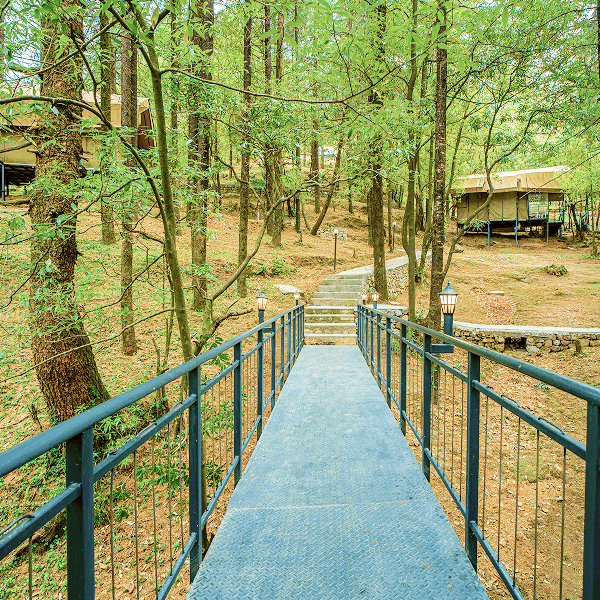
- The feel of deodar or oak forest: soft light, the smell of resin at dawn, wind high in the treetops
Best location near Dehradun: The Mussoorie hills, especially the forest along Hathipaon Road and around Cloud's End. On the eastern side, the Jabarkhet Nature Reserve near Landour offers forest trails of its own.
EBC Mussoorie is built on this idea. It sits at 2,160 m in deodar, pine and rhododendron forest, 35 km from Dehradun. A guided walk runs daily from 7 to 9 AM, and a bonfire is lit each evening. Its cottages, villa and tents show the approach clearly.
Nature Retreat Type 2: Who Is a River and Valley Stay For?
What it is: A stay on or near a Himalayan river or stream. The water shapes the mood of the place and what you do there.
What it offers:
- The sound of the river, always in the background
- Morning mist over the water in October and November
- Fishing, river walks, or just sitting by the water
- A lower altitude than the hill stays, so the days are warmer
Best location near Dehradun: The Song river valley toward Rishikesh. The Ganga riverside at Rishikesh itself. A few places along small hill streams in the Dehradun valley.
Who it suits: People who find running water more calming than forest silence. Couples who want a change from the usual hill station. Fly-fishers, in season.
Nature Retreat Type 3: Meadow and Open Landscape Stay
What it is: A stay in or near high meadows. The land is open, the sky fills the view, and you feel space around you rather than a forest roof above.
What it offers:
- 360-degree views, ideal for stargazing and sunrise
- Wind and weather that you feel all day
- High-altitude plants, including rhododendron in bloom from March to May
- A sense of scale and openness that a forest stay cannot give
Best location near Dehradun: Dhanaulti and Kanatal, beyond Mussoorie. The Chopta meadows, much further, a long day's drive from Dehradun. Dayara Bugyal, a trek of several hours up from Barsu village.
Who it suits: Photographers who love landscape and sky. Travellers who feel shut in by thick forest. Anyone keen on high meadow plants and wildlife.
Nature Retreat Type 4: Where Can You Stay Near Wildlife and Grassland?
What it is: A stay at the edge of a protected wildlife area. Watching animals is the main event.
What it offers:
- Jeep safaris into the protected forest
- River and grassland habitat full of birds
- Elephant, deer, leopard and tiger sightings, depending on the zone
- The sharp, quiet focus that comes with watching for wildlife
Best location near Dehradun: Rajaji National Park covers about 820 square kilometres. It is the closest wildlife reserve to Dehradun. Its Chilla zone, about 55 km from Dehradun, is reliable for elephants and birds. Jim Corbett is a much longer drive.
Who it suits: Wildlife lovers. Families with older children who enjoy spotting animals. Photography groups.
How Do You Match a Nature Retreat to Your Travel Purpose?
Use these filters.
- Rest and recovery: Choose a forest stay. For most people, a quiet, enclosed deodar forest restores the mind more than an open landscape does.
- Activity and exploring: Choose a meadow stay with treks nearby, or a wildlife stay with safaris.
- Couples and romance: A river stay for the sound of water and its closeness. A forest cottage for privacy and soft morning light. At EBC, the Zenith Luxury Cottage has a private, east-facing veranda for sunrise.
- Families with children: A wildlife or river stay often works best. Children take to animals they can see and water they can play by. A forest walk asks for long, patient quiet. At a forest resort, a guided bird walk or a night of stargazing helps children join in.
- Photography: Open meadows and high stays for landscape and sky. Forest stays for close-up birds and wildlife.
What Should You Know Before Planning a Nature Retreat Near Dehradun?
- Getting there: Jolly Grant Airport in Dehradun has daily flights from Delhi, Mumbai and Bangalore. It is about 55 km from EBC, or 1.5 hours. By road, EBC is about 280 km from Delhi, or 5.5 to 6.5 hours. The Shatabdi Express runs from Delhi to Dehradun in about 5.5 hours.
- Picking a season: Each type of retreat has its peak. Forest stays work all year, with a different mood each season. River stays are best from October to March, when water levels settle. Meadow stays are best from May to October. Rajaji is open for wildlife from November to June.
- The monsoon: Forest stays come into their own in the rains, with mist and deep green. EBC stays open from July to September, its quietest season, and every tent and cottage is weather-proofed. Hill roads can close after landslides, so check advisories before you drive and keep your plans flexible.
- When to book: Good nature retreats near Dehradun fill up 2 to 3 weeks ahead for October to November and March to June. In the off-season, most places can take last-minute bookings.
For the practical basics of a forest stay near Mussoorie, see Tripoto's guide to EBC Mussoorie. It covers the tents, the activities and the routes from Delhi.
Hotelier India's feature on EBC shows how one nature-led stay in these hills mixes outdoor adventure with comfort.
Common Questions
Frequently Asked Questions
Everything you need to know before booking a nature retreat near Dehradun.
For hill forest, the Mussoorie ridge is closest. EBC Mussoorie is 35 km from Dehradun, about 1 to 1.5 hours by road. For wildlife, Rajaji National Park's Chilla zone is about 55 km away.
A forest stay in the Mussoorie hills is the most balanced start. It is easy to reach, beautiful and comfortable, and it calms you down without much effort.
Yes, if you choose the type with care. Forest stays are at their most atmospheric in the rains. EBC Mussoorie stays open right through the rains. Rajaji is closed to day visits from mid-June to mid-November. For river stays, check water levels first. In July and August, allow for road delays.
Yes. Take the train to Dehradun, then a cab or a resort pickup. That reaches most places. EBC can arrange a transfer from Dehradun station if you ask when you book.
Layers for changing temperatures, waterproof shoes for forest trails, insect repellent, binoculars for wildlife and a field guide to name what you see.
Two nights is the minimum for real rest. Three nights give your mind time to leave the city behind, and that is when the stay works best.