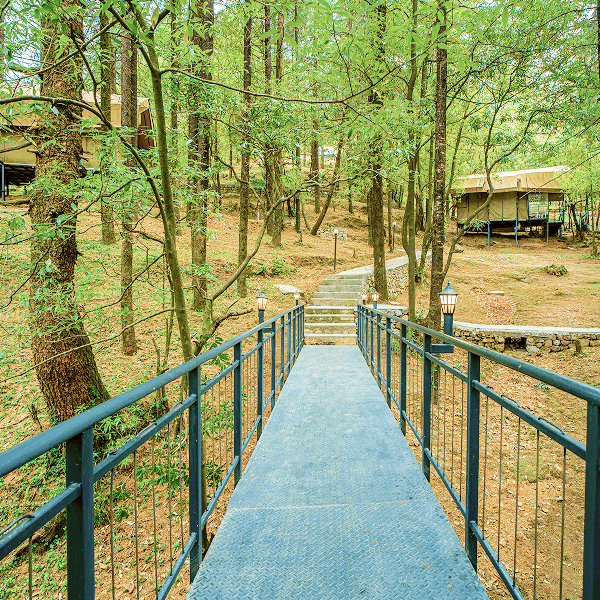
Team Building Retreat in Monsoon India
Why the Off-Season Is Actually the Right Season for Corporate Groups
Most HR teams rule out the monsoon. Yet the things that make a retreat work, such as fewer crowds, a slower pace and a setting that makes a group adapt, are exactly what the rains bring.
The Monsoon Corporate Retreat Guide
Most HR teams planning a team building retreat rule out the monsoon without a second thought. The instinct makes sense. Rain sounds like a problem when your agenda has outdoor activities in it. Road trouble sounds like a nightmare when you are the one getting 50 people there and back.
But the instinct deserves a closer look. Many of the things that make a corporate retreat work are exactly what the monsoon brings. Crowds thin out. The outside world slows down. The setting makes a group work with the conditions, not against them. This guide is for the HR manager or team lead weighing up a monsoon retreat in India. It will help you think it through before you rule it out, or before you commit without a plan.
What Is the Honest Case for a Monsoon Team Building Retreat?
Start with what the monsoon really offers a corporate group:
- Easier access to the venue you want: In May, June and October, good hill retreats book out early, and your group may share the grounds with weekend crowds. July and August are far quieter. At a small estate, it is much easier to hold the whole place for your team.
- No competition for space or attention: When the property is quiet, your group has it more or less to itself. The common spaces, the café and the outdoor areas all turn around your group. You are not sharing them with other guests.
- The weather creates its own team dynamic: Most HR guides miss this point. Picture a group that has to adjust its plan to the weather as the day unfolds. It decides together whether to head out in light rain or stay in. It reshapes the afternoon and makes the most of what the day allows. That is exactly the shared, flexible decision-making that team building is meant to grow. The constraint is the exercise.
- A slower pace leads to better conversations: When the weather limits outdoor plans, nobody can overpack the schedule. The retreat slows down and leans on conversation. Teams that spend three hours around a dinner table, with nowhere else to be, often say those unplanned talks were the best part of the trip.
What Does a Monsoon Team Building Retreat Need From a Venue?
A monsoon corporate retreat asks more of a venue than a summer one does. Check these five things:
- A covered place to meet: An open-air meeting space with no cover will not work for planned sessions in July and August. The venue needs an indoor room, or a covered pavilion that still works in steady rain.
- Indoor space with some character: On a full day of rain, the group needs somewhere to be together. It should not be the meeting room, and it should not be everyone's own room. A café with shared tables, a covered lounge or an indoor common room that fits the whole group gives you the relaxed social space no agenda can create.
- Activities that work in mixed weather: The best monsoon activities work in both light rain and clear spells. A guided forest walk works in a drizzle. A photo challenge works in mist. Indoor sessions work whatever the weather. Skip river rafting at Rishikesh in these months. It is usually suspended through the peak monsoon, when the Ganga runs high.
- Wi-Fi you can rely on: Most corporate groups need Wi-Fi that works, even if only a few people check in now and then. EBC Mussoorie has free Wi-Fi throughout the property, good for browsing and video calls. Signal can still vary in the mountains, and heavy weather can affect it, so plan key calls with some slack. Not every hill retreat offers this, so always ask.
- Flexible group meals: In the monsoon, meal times need to bend. If a walk runs long because the weather is better than expected, lunch has to move. If the rain clears early and the group wants dinner by the fire, the kitchen has to make it happen. Ask about this flexibility before you book.
Why EBC Mussoorie for a Monsoon Team Building Retreat?
EBC Mussoorie is a luxury glamping resort in a private forest estate on Hathipaon Road, beside George Everest House, at 2,160 m. It has 14 rooms in seven categories. They sleep 28 guests without extra beds and up to 50 with them. The resort hosts corporate groups of 8 to 48 guests and stays open through the monsoon. Every tent and cottage is weather-proofed.
For a corporate group planning a monsoon retreat, these features matter most:
- The Den, a private indoor lounge on the estate for meeting, working together or celebrating
- Free Wi-Fi throughout the property
- Park Café on the estate for group meals, with full board on request
- A bonfire every evening, with seating and blankets
- Barbecue evenings on the estate
- A guided forest walk, run daily from 7 to 9 AM and included with every stay
- Sir George Everest's house a short walk away, for a morning visit with a story behind it
- Rooms from The Camper to The Andrew's Villa, which suits a group with a mix of seniority
- A dedicated EBC host for your group, and the option to book all 14 rooms so no other guests are on site
This size suits leadership teams, cross-functional groups and mid-sized team retreats. It is not built for all-hands company events. For team building, that is the sweet spot. The group is large enough for real group dynamics, yet small enough for every person to take part fully.
View the rooms and group setup at EBC Mussoorie, then contact the team for monsoon group dates and programme options.
What Does a Practical Monsoon Agenda for a 2-Night Group Stay Look Like?
Build the plan around the monsoon pattern. Mornings are often the clearest part of the day. Cloud and rain tend to build from late morning, and some evenings clear again. Before the group travels, check road and weather advisories, since hill roads can close after heavy rain or a landslide. Keep the plan flexible, and treat it as a slow stay, not a trekking trip.
Day 1 (Arrival afternoon): The group reaches EBC Mussoorie by 3 PM. Take a short walk to get to know the estate. Have a relaxed dinner at Park Café. Sit by the bonfire if the weather allows. Hold no formal sessions on the first evening.
Day 2 (Full programme day):
- 7 AM: Guided walk through the deodar forest for anyone who wants it. It is a strong, easy way to bond, and it needs no facilitator.
- 8:30 AM: Breakfast.
- 9:30 AM to 12:30 PM: Core strategy session indoors. This is the sharpest window of the day, so use it for your most important content.
- 12:30 PM: Lunch at Park Café.
- 2 to 3:30 PM: Outdoor block if it is dry, such as a team photo challenge on the estate or a problem-solving task on the trails. If it is raining, run an indoor challenge instead.
- 4 to 5:30 PM: Facilitated workshop indoors. Choose a format that works during steady rain.
- 5:30 to 7 PM: Rest and free time.
- 7:30 PM: Group dinner. Barbecue outdoors or dinner at Park Café, depending on the weather.
- 9 PM: Bonfire on the estate if the weather allows. Open, unplanned social time.
Day 3 (Morning wrap-up):
- 7 AM: Breakfast.
- 8 to 10:30 AM: Wrap-up session. What are we taking back? Agree on owners, commitments and follow-up.
- Late morning: Check out, then an optional visit to George Everest House.
- 12 noon: Departure, with time in hand for the roads.
Why Does a Forest Estate in the Monsoon Build Teams So Well?
This is worth saying plainly, because a planning spreadsheet will not show it.
Take a team out of the office and put it in a forest estate in the rain, and workplace rank starts to matter less. The colleague who commands the conference room walks the same wet grass path as everyone else. The quiet team member who rarely speaks in meetings often finds a voice outdoors.
The George Everest setting at EBC Mussoorie adds another layer. Sir George Everest led the Great Trigonometrical Survey of India, mapping the land with rare scale and precision. That story gives a leadership team something real to talk about. It is not generic retreat scenery. It has its own identity, and a facilitator or team lead can use it on purpose.
Hotelier India's feature on EBC describes archery, cycling and treks alongside events and conferences. For a corporate retreat, that mix of activity and comfort shapes how a group gets on.
Common Questions
Frequently Asked Questions
Everything you need to know before planning your monsoon team building retreat.
Yes, with the right venue and a well-built programme. The monsoon brings quieter properties, a slower pace and weather that shapes the group in ways a clear-weather retreat does not. Keep travel plans flexible.
Mussoorie and the Garhwal hills give Delhi-based groups the best mix of venue quality and easy access. EBC Mussoorie is about 280 km from Delhi, or 5.5 to 6.5 hours by road. Rishikesh suits adventure formats outside the monsoon, since rafting usually pauses in the rains. For July and August dates, check road conditions close to travel.
It pushes most outdoor activity into the mornings and makes good indoor space more important. A well-planned monsoon retreat treats the weather as part of the programme, not as an obstacle.
Facilitated sessions and team workshops indoors, creative indoor challenges, bonfire evenings when the rain eases, and morning forest walks in light rain with the right clothing.
Yes. EBC Mussoorie stays open through the rains. It hosts corporate groups of 8 to 48 guests, with The Den as a private indoor space. Contact the team to check your dates and plan a programme that suits the season.
The estate sleeps 28 guests without extra beds and up to 50 with them, across 14 rooms. Groups of about 15 to 28 are the sweet spot. At that size every person gets real attention in sessions, and you can book all 14 rooms for privacy.